Twenty-Five Cents of Wonder: How Gachapon Capsules Became America's Most Unexpected Collectibles
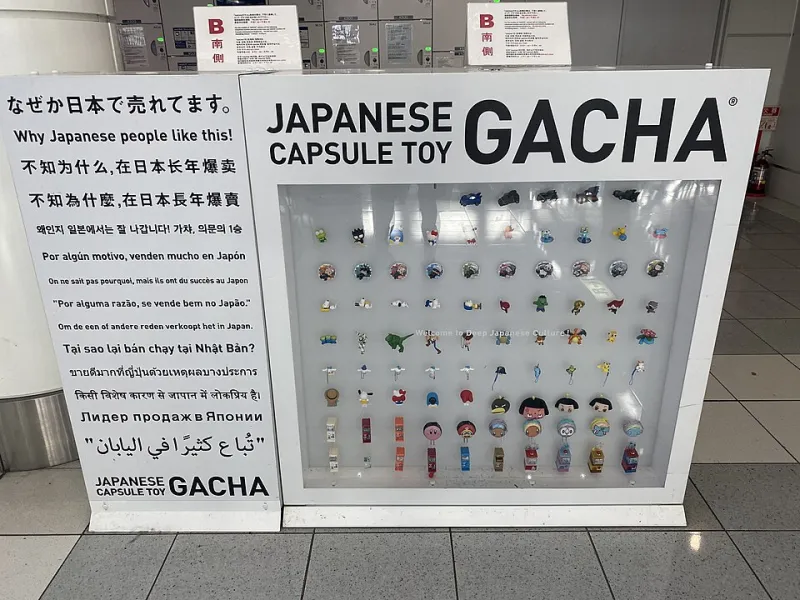
Photo: Immanuelle, CC BY-SA 4.0, via Wikimedia Commons
A Machine That Fits in Your Pocket
There's a particular sound collectors describe with almost reverent affection: the hollow clunk-clunk of a plastic capsule tumbling down a vending machine's chute. In Japan, that sound is everywhere — train stations, drugstore entrances, the outside of ramen shops. In America, it used to be practically nowhere. Today, it echoes through convention halls in Los Angeles, Portland, and New York, where grown adults line up to spend their cash on tiny sealed spheres containing miniature hamburgers, cats in bread loaves, and impossibly detailed figures smaller than a thumb.
Welcome to the strange, delightful economy of gachapon — the Japanese capsule toy phenomenon that has become one of the most surprising collector movements in the United States.
From Street Corner to Convention Hall
Gachapon (also spelled gachapon or gacha-gacha, mimicking the crank-and-drop sound of the machines) dates back to 1965, when the Japanese toy company Penny Shokai introduced America's vending capsule concept to Japanese audiences with a small, spring-loaded machine. The format was simple and irresistible: insert a coin, twist the knob, receive one randomly selected toy from a themed series.
What Japan did with that concept, though, was pure alchemy. Companies like Bandai and Takara Tomy turned capsule toys into a legitimate art form, releasing meticulously sculpted miniature series — everything from regional snacks rendered in 1:12 scale to tiny dioramas of everyday Japanese life. Each series typically runs six to twelve figures, with a handful of "secret" or chase figures hidden in the lineup at odds as low as 1 in 144.
For decades, this remained a quintessentially Japanese experience. American tourists would stuff their suitcases with capsules like contraband. But around the mid-2010s, the machines began crossing the Pacific in earnest.
The American Beachhead
The first footholds were predictable: anime conventions, Japanese grocery stores in California and Hawaii, specialty shops in cities with strong Japanese communities. Then something shifted. Gachapon stopped being a novelty import and started being a hobby.
A big part of the credit goes to dedicated importers who began placing real Japanese machines — stocked with authentic series shipped directly from Tokyo — in malls, arcades, and collector shops across the country. Suddenly, a teenager in Ohio could experience the same randomized thrill as a shopper in Akihabara.
Social media did the rest. TikTok and Instagram are now saturated with "capsule opening" videos, where creators film the full ritual: the coin drop, the crank, the suspenseful shake, the reveal. A single viral video of a rare figure — say, the elusive secret version of a popular cat-in-a-box series — can send resale prices into a spiral.
And those prices can get serious. Sealed, unopened capsules from discontinued series regularly trade for $50 to $150 on eBay and at conventions. Individual chase figures, especially from beloved collaborations with Sanrio, Pokémon, or popular anime franchises, have fetched several hundred dollars. One collector we spoke with at a West Coast convention described paying $280 for a single sealed capsule from a 2019 series she'd missed the first time around. "I'll probably never open it," she admitted, laughing. "That's part of the sickness."
The Hunters
American gachapon collecting has developed its own subculture, complete with terminology that would be familiar to any trading-card veteran. There are "completionists" who won't rest until every figure in a series is accounted for. There are "shakers," collectors who swear they can identify a chase figure by the way a capsule rattles and shifts in the hand — a skill that borders on superstition but has its true believers. And there are flippers, who buy entire cases hoping to pull the rare figure and resell the duplicates.
What sets gachapon apart from other collectible booms is its low barrier to entry. A single capsule typically costs between $3 and $5 in the US — a far cry from the hundreds of dollars required to enter many modern hobby markets. That accessibility has made it a gateway collectible, pulling in young collectors and nostalgic adults alike.
It's also a genuinely fun way to engage with Japanese culture. Many series are miniature love letters to everyday life in Japan: tiny vending machines inside tiny vending machines, miniature festivals, micro-replicas of regional cuisine. For collectors, each capsule is a small, affordable piece of a place most have only visited in their imagination.
A Beginner's Guide to Tomorrow's Treasures
So how does a newcomer avoid dumping money into capsules that will never be worth more than the plastic they're sealed in? Veteran collectors tend to agree on a few principles.
Buy what you love, but buy complete series when you can. Unopened capsules from a discontinued series appreciate far more reliably than random singles. If a series speaks to you, grab extras before it leaves rotation — Japanese capsule series typically run for only a few months.
Know the secret figures. Before you buy, look up the series' chase pieces and their pull rates. Sealed capsules that might contain a 1-in-144 secret carry a built-in lottery premium.
Favor collaborations and anniversaries. Series tied to major franchises or milestone anniversaries tend to have staying power. A capsule celebrating a franchise's 25th birthday will always have a market that a generic "cute animals" series lacks.
Check the machine's origin. Authentic Japanese machines with official Bandai or Tomy Arts series hold value far better than unlicensed knockoff capsules. Look for the manufacturer's marks on the capsule and any included leaflets.
Condition is everything. Keep the capsule sealed, keep the leaflet, and keep it out of direct sunlight. The collector market rewards patience and care.
Small Capsules, Big Treasures
There's something fitting about gachapon's rise in American collecting culture. In a hobby landscape increasingly dominated by six-figure trading cards and graded slabs, the capsule toy remains stubbornly democratic — a few dollars, a twist of the wrist, and a moment of genuine surprise.
The name of this site translates to "treasure of the world," and gachapon might be the purest expression of that idea we've covered yet: small wonders, sealed in plastic, carrying a little piece of Japanese craftsmanship across the ocean one capsule at a time. Whether they're tomorrow's four-figure grails or simply tomorrow's desk companions, the real return on investment has always been the same. It's the sound of the capsule dropping — and the half-second before you find out what's inside.