Hanging by a Thread: The Vintage Japanese Tenugui Quietly Taking Over American Walls
There’s a particular kind of collector who stops dead at a rumpled stack of cotton at a estate sale. Not quilts. Not napkins. Something longer, narrower, and oddly graphic — a Japanese tenugui, the everyday hand towel that has spent centuries doing unglamorous work and, lately, a very different second act in American homes.
At first glance, a tenugui looks almost too plain to collect. It’s a rectangle of cotton, usually around 13 by 35 inches, hemmed only at the short ends. The long edges are often left raw, because the cloth is meant to fray a little, soften with washing, and dry fast. Then you unfold one and the surface tells another story: indigo carp, tiny daikon radishes, a festival crowd, a shop’s name in bold kanji, a map of a neighborhood, a welcome-to-the-onsen scene. The best vintage pieces feel like posters that happened to be towels first.
The Towel That Was Never Just a Towel
Tenugui have been around for centuries, but their modern collecting appeal comes from a very specific sweet spot: they were made in enormous variety, used hard, and often kept anyway. Temples printed them for pilgrims. Kabuki theaters sold them as souvenirs. Neighborhood shops handed them out with a logo. Families packed them for summer festivals and sent them as small gifts. Because they were cheap and useful, they slipped into daily life in ways that more precious textiles never could.
That everydayness is exactly what makes them interesting to American buyers now. A tenugui is not a museum object with a velvet rope around it. It’s a piece of commercial and cultural history that can still be bought for the price of a nice lunch, especially if you’re willing to dig.
Reading the Cloth: What Older Tenugui Can Tell You
Vintage tenugui are not usually labeled with a date. Instead, you learn to read them the way you’d read a piece of old signage. Fabric weight matters: older pieces often feel denser and a little crisper than modern tourist towels, even after years of washing. The selvedge — the finished long edge — can also be a clue. Some older tenugui have a woven edge with slight irregularity, while cheaper modern reproductions may have a cut edge that looks too clean or too uniformly sealed.
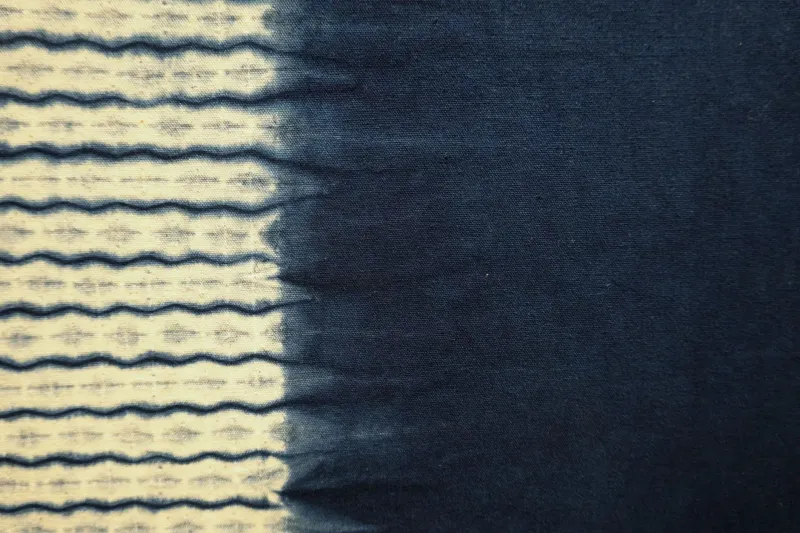
Print quality is another tell. Traditional chusen dyeing pushes color through both sides of the cloth, so the image should look presentable from the back, not like a thin screen print sitting on one surface. If the reverse side is noticeably pale or plasticky, be suspicious. Genuine chusen can still have small variations and blurry edges — that’s part of the charm — but the color should feel embedded in the cotton rather than applied on top of it.
Smell and hand feel are underrated tools. Old cotton has a softness that doesn’t come from fabric softener. It drapes. A piece that feels stiff, shiny, or strangely slippery is probably newer than it looks.
Chusen Dyeing and the Motifs That Matter
Chusen is the paste-resist dyeing method most collectors associate with high-quality tenugui. In simplified terms, dye is poured over folded cloth so that it penetrates both sides, producing deep, saturated color and a characteristic softness at the edges of the design. You don’t need to become a textile chemist to appreciate it, but knowing the term helps when you’re asking questions at a shop or scrolling through online listings.
Motifs run from the poetic to the deeply practical. Seasonal flowers, Mount Fuji, waves, and animals are perennial favorites. Commemorative designs — a shop opening, a sumo tournament, a railway anniversary, a local festival — tend to be scarcer and more story-rich. Some collectors focus on typography: old tenugui with bold, hand-lettered shop names can look astonishing when framed. Others chase pictorial maps or illustrated calendars, which double as small windows into a specific place and moment.
For American buyers, condition is part of the charm but also part of the negotiation. A little fading is normal. A few pinholes or a softened patch from years of use can be acceptable if the design is strong. Major stains, heavy bleeding, or a big tear through the central image are harder to forgive.
Where to Hunt in 2026
The good news is that tenugui still turn up in places that reward patience. Estate sales in areas with older Japanese American communities can be quietly excellent. Flea markets — the kind with mixed tables of kitchenware, linens, and paper ephemera — are worth a slow pass. Specialty Japanese shops and museum gift stores sometimes carry vintage or dead-stock pieces alongside new ones, and Japanese grocery stores in cities like Los Angeles, San Francisco, Seattle, and New York occasionally have small housewares sections with tenugui tucked in.
Online, the hunt is faster but noisier. Search terms like “vintage tenugui,” “chusen tenugui,” and “Japanese cotton towel” will surface plenty of modern reproductions mixed with older pieces. Look for sellers who show both sides of the cloth, mention the selvage, and don’t rely on the word “vintage” as a personality. Prices vary widely: common modern tenugui might run $10 to $25, while older commemorative or especially graphic pieces can climb higher. In 2026, the market is still friendly to beginners, but the best pieces don’t sit around forever.
Telling Vintage from Modern Reproductions
Modern tenugui are not the enemy. They’re often well made, and many are beautiful. But if you’re paying a vintage premium, you want to know what you’re getting. A few quick checks help.
First, look at the edges. Traditional tenugui are usually hemmed only at the short ends, with raw long edges. A modern towel that is neatly hemmed on all four sides may be a different kind of product entirely. Second, check the dye penetration. Hold it up to light or look at the back. Chusen should look alive on both sides. Third, consider the design language. Older pieces often have a slightly looser, more hand-drawn quality; modern reproductions can look a little too crisp, too centered, or too eager to please. Finally, ask about provenance when you can. A seller who knows whether a piece came from a temple shop, a family estate, or a warehouse lot is giving you useful information, not just atmosphere.
Display Without Damage
Tenugui are wonderfully easy to display, which is part of their appeal. The simplest method is a tension rod or a thin wooden dowel through the top hem, hung away from direct sun. Framing is also popular, but avoid pressing the cloth directly against glass. Moisture can get trapped, and dye can transfer. Use a mat or spacers to give the textile breathing room.
Rotate pieces seasonally if you can. Tenugui were meant to be used and seen, not sealed in a drawer. Just keep them out of prolonged direct sunlight, which will fade even stable dyes over time.
Care and the Long Game
Wash vintage tenugui gently, by hand, in cool water with a mild detergent. Rinse thoroughly and hang to dry in the shade. Avoid bleach, hot dryers, and anything that promises to make old cotton look new. The softened hand and slight irregularity are the point.
Collecting tenugui is a long game of small discoveries. You won’t find a grail every weekend. But you will find cloth that carries the marks of ordinary life — a shop name, a festival date, a design someone chose because it was beautiful or useful or both. In a collecting world that often prizes the rare and the sealed, that’s a quiet kind of treasure. And it hangs beautifully on a wall.