The Other Movie Poster: Vintage Japanese Chirashi and the American Flat-File Hunt
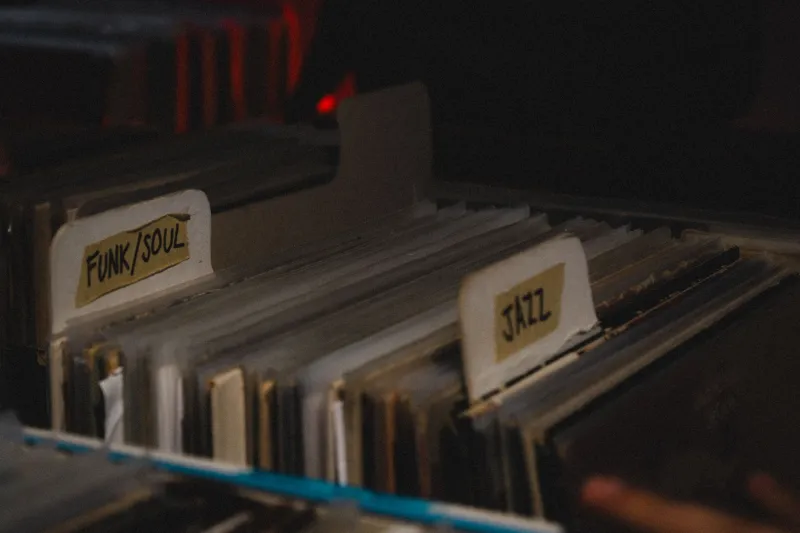
Walk into a certain kind of American collector's apartment and you will see the usual suspects: a flat file full of vintage travel posters, a shelf of vinyl, maybe a framed concert handbill. Then comes the drawer that makes people lean in. It is packed with Japanese movie chirashi, small, dense, loud pieces of paper that once lived in theater lobbies and now feel like secret storyboards for an alternate film history.
At 世界の宝物, we are suckers for objects that carry a whole world in a few square inches. Chirashi do exactly that. They are affordable enough to actually collect, beautiful enough to frame, and obscure enough that you can still feel like you discovered something before the rest of the room did.
What Exactly Is a Chirashi?
The word chirashi comes from the idea of scattering or handing out. In practice, a chirashi is a promotional flyer or pamphlet for a film, usually printed on paper and distributed in theaters, record shops, coffee houses, and other spots where moviegoers might pass by. Think of it as the Japanese cousin of a press sheet, a handbill, and a mini poster, but with its own visual grammar.
Most chirashi run roughly 7 by 10 inches, though folded pamphlets and B5-size sheets show up too. Early examples can be simple single sheets. Later ones may be double-sided, folded, or even multi-page booklets with cast lists, staff credits, taglines, release dates, and theater information. They are not just miniature posters. They are pocket-sized campaigns, designed to be read up close and then shoved into a bag.
That intimacy is part of the appeal. A chirashi invites you to lean in. The typography is often vertical, the credits are packed tight, and the artwork can be wildly ambitious: hand-painted monsters, airbrushed gangsters, photomontage romances, and sleek anime promos all sharing the same small rectangle.
Why American Collectors Are Biting
The first reason is price. Compared with original Japanese film posters, many chirashi remain approachable. You can build a serious-looking collection without spending one-sheet money, and that makes them a natural gateway for American collectors who love movie history but have been priced out of the poster market.
The second reason is design. Japanese film publicity from the 1950s through the 1980s has a graphic confidence that translates instantly, even if you cannot read a word of Japanese. The colors are bold, the layouts are busy in the best way, and the mix of illustration and photography can feel like a lost art form.
The third reason is range. Chirashi cover kaiju films, samurai dramas, yakuza pictures, anime, romance, horror, and art-house releases. You can collect by studio, by director, by genre, or by the simple rule of buying whatever makes you stop scrolling. A single drawer can hold a mini film festival.
Reading the Paper: Eras and Studios
Era cues are your friend. Earlier chirashi, especially from the 1950s and 1960s, often have a letterpress feel, limited color, rough paper, and hand-drawn or painted artwork. Typography tends to be vertical and dense. By the 1970s, airbrush and photomontage take over, layouts get bolder, and double-sided printing becomes more common. The 1980s and 1990s bring glossier paper, more photography, and a surge of anime and idol-film material.
Studio marks help too. Look for names like Toho, Toei, Shochiku, Daiei, Nikkatsu, and ATG. Distributor credits, release dates, and the Eirin mark, Japan's film censorship and rating stamp, can all help place a piece in time. The back matter matters as much as the front. Theater stamps, date stamps, and handwritten notes are not necessarily flaws. They are evidence of the object's life.
Condition: The Usual Suspects
Paper ephemera is rarely mint, and that is part of the charm. Expect folds, edge wear, toning, foxing, pinholes, and the occasional tape scar. Original fold lines are normal for folded issues, so do not confuse them with damage. What you want to watch for is heavy water staining, trimming, brittle paper, and tape that has turned brown and hungry.
A simple three-tier approach works well: displayable, collectible, and reference. Displayable means it presents cleanly in a frame or sleeve. Collectible means it has honest wear but still reads well. Reference means it is best used for research or placeholding until a better copy comes along.
Authenticity and Reproductions
Reprints exist, and they are getting better. Start with the paper. Period chirashi usually have a slight tooth and a bit of age, not the stiff, bright feel of modern inkjet stock. A loupe helps. Offset printing shows halftone dots and a certain mechanical regularity. A reprint often looks too clean, too saturated, or suspiciously crisp in the wrong way.
Ask for back scans. Compare dimensions against known copies. Be wary of a 1960s kaiju chirashi priced like a bookmark and shipped by a print-on-demand shop. If the seller hides the back, cannot explain provenance, or uses the same photo for five different listings, keep walking. The good news is that the U.S. market is still small enough that most sellers are happy to talk.
Storage and Display Without Regret
Store chirashi flat in acid-free folders or archival sleeves. A flat file is ideal, but a clean, dry box with rigid support works for a starter collection. Keep them out of attics, basements, and humid kitchens. Heat and moisture are not kind to paper.
If you frame, use acid-free mats and UV-filtering glass. Add spacers so the artwork does not touch the glass. Do not dry mount, trim, or laminate. Ever. Rotate pieces on display to limit light exposure, and digitize the fronts and backs for your records. Photo corners are fine. Tape is not.
A Starter Strategy for 2026
Pick a lane. One director, one studio, one genre, one year, or one wild theme such as movies set at sea. Build a want list. Buy the films you would actually watch. As of 2026, chirashi still feel like one of the last affordable corners of Japanese film collecting, but the secret is getting out.
The real treasure is not just the paper. It is the way a chirashi lets you hold a piece of movie history for the price of a streaming subscription, and sometimes less. That is a very good deal for a very small drawer.